How to Create an Effective Customer Journey Map [Examples + Template]

How to Create an Effective Customer Journey Map [Examples + Template]

Written by Aaron Agius @IAmAaronAgius

Free Download: Customer Journey Map Template Access Free Journey Map Templates  

woman looking at a map that represents the customer journey

Understanding the minds of customers can be challenging. You think you have accounted for their wants and needs, but then new technology, preferences, and buying trends emerge.

According to Baymard Institute, nearly 70% of online shoppers abandoned their cart in 2021. Why does a customer spend hours adding products to their cart just to close the tab? Why is it taking customers several steps to get from point A to point B when it should only take one?

It is likely that you do not have a clear grasp of the customer’s journey to purchasing your product or service.

Download Now: Free Customer Journey Map Templates
customer journey map templates download

Download Now

In this post, we’ll explain everything you need to know about the customer journey, including what it is and how to map it. If you’re in a rush, you can use the links below to navigate to the exact information you’re looking for.

FEATURED RESOURCE

Table of Contents

 What is a customer journey map?

A customer journey map is a visual representation of a customer’s experience with a company. It provides an understanding into the needs and concerns of potential customers which directly motivate or inhibit their actions. This information allows companies to boost customer experience leading to higher conversion rates and improved customer retention.

The customer journey is the process by which a customer interacts with a company in order to achieve a goal. From gaining awareness of a brand via social media to receiving an email after a successful transaction, there are usually many and varied steps in between. It is not something to assume or predict based on your internal perspective. A customer journey is very specific to the physical experiences your customers have.

Thus, the best way to understand the journeys of your customers is by asking them

Why is a journey map important?

The customer journey seems simple. Companies offer a product or service, and customers buy it. The journey is actually more complex than that. Salesforce reported that 80% of customers consider their experience with a company to be as important as its products. From the time a customer is introduced to a product to when they purchase it, they go through the buyer’s journey.

On this journey, customers might see ads, speak to a customer service representative, or attempt to check out. These are stops along the journey that affect their actions. Understanding the process and its consequences on customer interactions allows a business to plan and prepare to drive customers towards a sale.

However, simply understanding the customer journey isn’t enough. It’s best to visualize this complicated journey into a diagram that you and other employees can refer to as a resource. This is where designing a customer journey map comes into play. 

The Customer Journey Mapping Process

Customer journey mapping is the process of creating a customer journey map — the visual representation of a company’s customer experience. It compiles a customer’s experience as they interact with a business and combines the information into a visual map.

By understanding this relationship, you can structure your touchpoints to create the most effective and efficient process for your customers. A customer journey map visualizes the current process customers take, from the first to final touchpoint, to see if they’re currently reaching their goals and, if not, how they can.

Customer journeys are not linear.

The customer journey can rarely be represented in a linear journey from point A to point B because buyers often take a back and forth, cyclical, multi-channel journey. This makes customer journey mapping difficult to accurately visualize.

For this reason, savvy business leaders use a variety of methods to represent the journey, from post-it notes on a boardroom wall, to Excel Spreadsheets, to infographics. The most important thing is that the map makes sense to those who’ll be using it.

However, before you can dive into creating your customer journey map, you need to first collect data from your customers and prospects. The process of creating an effective customer journey map is extensive but valuable.

What’s included in a customer journey map?

  1. The Buying Process
  2. User Actions
  3. Emotions
  4. Pain Points
  5. Solutions

1. The Buying Process

A customer journey map includes significant milestones in the customer journey. You’ll begin by drafting the path your business intends for a customer to take in order to reach a goal. Using the typical buying process stages, you’ll list each stage horizontally.

2. User Actions

This element of the customer journey map details what a customer does in each stage of the buying process. They might speak with friends and family about their needs and potential ways to fulfill those needs in the awareness stage. From there, they might take a demo on your website, and then finally, they’ll use cash or a debit card to make their purchase. This element explores the various ways your customers might achieve the goal.

3. Emotions

Whether the goal is big or small, it’s important to remember your customers are solving a problem. That means they’re probably feeling some emotion — whether that is relief, happiness, excitement, or worry. If your process is long or complicated, they might feel a range of emotions at every stage. Adding these emotions to the journey map can help you mitigate negative emotions about the journey so that they don’t become negative opinions about your brand.

4. Pain Points 

Where there is a negative emotion, there’s a pain point that caused it. Adding pain points to your customer journey map can help you identify which stage your customer is experiencing negative emotions and deduce the reason why.

5. Solutions

As the final element in your customer journey map, solutions are where you and your team will brainstorm potential ways to improve your buying process so that customers encounter fewer pain points and have positive moods as they patronize your business.

What is a touchpoint in a customer journey map?

A touchpoint in a customer journey map is an instance where your customer can form an opinion of your business. Touchpoints can be found in places where your business comes in direct contact with the potential or existing customer. A display ad, an interaction with an employee, a 404 error, and even a Google review can be considered a customer touchpoint.

Your brand exists beyond your website and marketing materials, so it’s important that the different types of touchpoints are considered in your customer journey map because they can help uncover opportunities for improvement in the buying journey.

How to Create a Customer Journey Map 

  1. Set clear objectives for the map.
  2. Profile your personas and define their goals.
  3. Highlight your target customer personas.
  4. List out all the touchpoints.
  5. Identify the elements you want your map to show.
  6. Determine the resources you have and the ones you’ll need.
  7. Take the customer journey yourself.
  8. Make necessary changes.

1. Set clear objectives for the map.

Before you can dive into creating your map, you need to ask yourself why you are making one in the first place. What goals are you directing this map towards? Who is it specifically about? What experience is it based upon?

Based on this, you may want to create a buyer persona. This is a fictitious customer with all of their demographics and psychographics who represents your average customer. Having a clear persona is helpful in reminding you to direct every aspect of your customer journey map towards them.

2. Profile your personas and define their goals.

Next, you should conduct research. Some great ways to get valuable customer feedback is through questionnaires and user testing. The important thing is to only reach out to actual customers or prospects.

You want the feedback of people who are actually interested in purchasing your products and services and who have interacted with your company before or plan to do so.

Some examples of good questions to ask are:

  • How did you hear about our company?
  • What first attracted you to our website?
  • What are the goals you want to achieve with our company? In other words, what problems are you trying to solve?
  • How long have you / do you typically spend on our website?
  • Have you ever made a purchase with us? If so, what was your deciding factor?
  • Have you ever interacted with our website with the intent of making a purchase but decided not to? If so, what led you to this decision?
  • On a scale of 1 to 10, how easy is it for you to navigate our website?
  • Did you ever require customer support? If so, how helpful was it, on a scale of 1 to 10?
  • Is there any way that we can further support you to make your process easier?

You can use this buyer persona tool to fill in the details you procure from customer feedback.

3. Highlight your target customer personas. 

Once you’ve learned about the different customer personas that interact with your business, you’ll need to narrow your focus on one or two of them. Remember, a customer journey map tracks the experience of one customer who’s taking a very specific path with your company. If you group too many personas into one journey, your map won’t accurately reflect your customers’ experience.

If you’re creating your first map, it’s best to pick your most common customer persona and consider the route they would typically take when engaging with your business for the first time. You can use a marketing dashboard to compare each one and determine which would be the best fit for your journey map. Don’t worry about the ones you leave out, as you can always go back and create a new map that’s specific to these customer types. 

4. List out all the touchpoints.

Touchpoints are all the places on your website that your customers can interact with you. Based on your research, you should list out all the touchpoints your customers and prospects are currently using, as well as the ones you believe they should be using if there is no overlap.

This is an important step in creating a customer journey map because it gives you insight into what actions your customers are performing. If they are using fewer touchpoints than expected, does this mean they are quickly getting turned away and leaving your site early? If they are using more than expected, does this mean your website is complicated and it requires them several steps to get to an end goal?

Whatever the case may be, understanding the touchpoints is a tool that can help you understand the ease and objectives of customer journeys.

This doesn’t just mean your website. You need to look at all the ways in which your customer might come across you online. These might include:

  • Social channels
  • Paid ads
  • Email marketing
  • Third-party review sites or mentions

Run a quick Google search of your brand to see all the pages that mention you. Verify these by checking in on your Google Analytics to see where your traffic is coming from.

Whittle your list down to those touchpoints that are the most common and will be most likely to see an action associated with it. Consider these touchpoints as you create your journey map: 

Customer Actions

List out all of the actions your customers perform throughout their interaction with your brand. This might be a Google search for your keywords or clicking on an email from you. You may wind up with a long list of actions. That’s fine. You’ll get a chance to rationalize your information later.

It’s important to recognize when customers are being expected to take too many actions to achieve their goals. Reducing the number of steps a customer needs to take can feel risky, but pays off in higher conversion rates.

Customer Emotions & Motivations

All marketing is a result of cause and effect. Likewise, every action your customer takes is motivated by emotion. And your customer’s emotions will change depending on which part of their journey they’re at.

The emotional driver of each of your customer’s actions is usually caused by a pain point or a problem. Knowing this will help you to provide the right content at the right time so that you smooth the customer’s emotional journey through your brand. 

Customer Obstacles & Pain Points

Get to know what roadblocks are stopping your customer from making their desired action. One common obstacle is cost. For example, one of your customers could love your product but abandon their cart upon discovering unexpectedly high shipping rates.

Highlighting these potential obstacles in your customer journey can help you mitigate them. For example, you could provide an FAQ page that answers common questions about shipping costs.

5. Determine the resources you have and the ones you’ll need. 

Your customer journey map is going to touch on nearly every part of your business. This will highlight all of the resources that go into creating the customer experience. So, it’s important to take inventory of the resources you have and the ones you’ll need to improve the customer’s journey.

For example, maybe your map highlights some flaws in your customer service offer and you notice that your team doesn’t have the tools they need to properly follow up with customers after a service interaction. Using your map, you can advise management to invest in customer service tools that will help your team manage customer demand.

And, by including these new tools in your map, you can accurately predict how they’ll impact your business and drive outsized value. This makes it much easier to convince gatekeepers and decision-makers to invest in your proposals. 

6. Take the customer journey yourself. 

Just because you’ve designed your map doesn’t mean your work is done. This is the most important part of the process: analyzing the results. How many people are clicking to your website but then closing out before making a purchase? How can you better support customers? These are some of the questions you should be able to answer with your finished map.

Analyzing the results can show you where customer needs aren’t being met. By approaching this, you can ensure that you are providing a valuable experience and making it clear that people can find solutions to their problems with your company’s help.

The whole exercise of mapping the customer journey remains hypothetical until you try it out yourself.

For each of your personas, follow the journey they take through their social media activity, through to reading their emails, through to searching online.

7. Make the necessary changes 

Your data analysis should give you a sense of what you want your website to be. You can then make the appropriate changes to your website to achieve these goals. Perhaps this is making more distinct call-to-action links. Or, maybe, it’s writing longer descriptions under each product to make its purpose more clear.

No matter how big or small the changes are, they will be effective as they are directly correlated with what customers listed as their pain points. Rather than blindly making changes in the hopes that they will improve customer experiences, you can feel certain that they will. And, with the help of your visualized customer journey map, you can ensure those needs and pain points are always addressed.

How often should you update your customer journey map?

Your map should be a constant work-in-progress. Reviewing it on a monthly or quarterly basis will help you to identify gaps and opportunities for streamlining your customer journey further. Use your data analytics along with customer feedback to check for any roadblocks.

I find it useful to keep all stakeholders involved in this process, which is why my maps are usually visualized on Google Sheets shared amongst the people I work closely with. It’s also beneficial to have regular meetings (quarterly or yearly) to analyze how new products or offerings might have changed the customer journey. 

Types of Customer Journey Maps and Examples

There are four types of customer journey maps, each having their own unique benefits. Depending on the specific purpose you have for the map, you can choose the proper one. 

Current State

These customer journey maps are the most widely-used type. They visualize the actions, thoughts, and emotions your customers currently experience while interacting with your company. They are best used for continually improving the customer journey. Customer Journey Map Example: Current State Journey Map

Image Source

Day in the Life

These customer journey maps visualize the actions, thoughts, and emotions your customers currently experience in all the activities in which they partake on a daily basis, whether or not that includes your company. This type gives a wider lens into the lives of your customers and what their pain points are in real life. They are best used for addressing unmet customer needs before customers even know they exist. Your company may use this type of customer journey map when exploring new market development strategies.
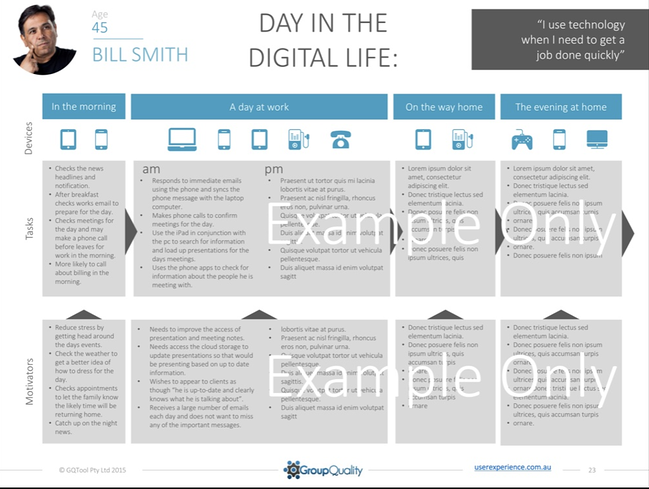
Customer Journey Map Example: Day in the Life

Image Source

Future State

These customer journey maps visualize what actions, thoughts, and emotions your customers will experience in future interactions with your company. Based on what their current experience is, you’ll have a clear picture of where your business fits in. They are best used for illustrating your vision and setting clear, strategic goals.
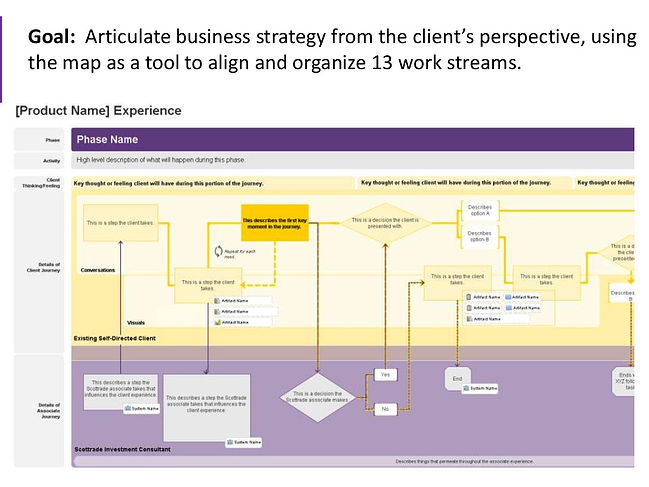
Customer Journey Map Example: Future State Journey Map Example

Image Source

Service Blueprint

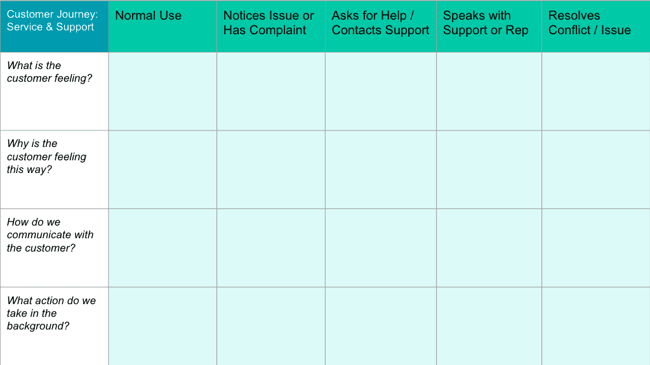
These customer journey maps begin with a simplified version of one of the above map styles. Then, they layer on the factors responsible for delivering that experience, including people, policies, technologies, and processes. They are best used for identifying the root causes of current customer journeys or identifying the steps needed to attain desired future customer journeys.
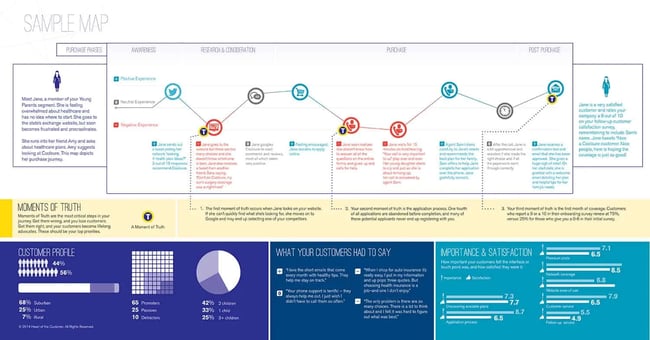
Customer Journey Map Example: Service Blueprint journey map

 Image Source

Customer Journey Mapping Best Practices

  1. Set a goal for the journey map.
  2. Survey customers to understand their buying journey.
  3. Ask customer service reps about the questions they receive most frequently.
  4. Create a customer journey map for each buyer persona.
  5. Review and update each journey map after every major product release.
  6. Make the customer journey map accessible to cross-functional teams.

1. Set a goal for the journey map.

Determine whether you’re aiming to improve the buying experience or launch a new product. Knowing what you need the customer journey map to tell you can prevent scope creep on a large project like this.

2. Survey customers to understand their buying journey.

What you know about the customer experience and what they actually experience can be two very different things. Ask your customers directly what it’s like doing business with your company so you have a more accurate snapshot of the customer’s journey.

3. Ask customer service reps about the questions they receive most frequently.

Sometimes, customers aren’t aware of their specific pain points — they simply feel when something isn’t working for them. That’s where your customer service reps come in. They can help fill in the gaps and translate customer pain points into business terms that you and your team can understand and act on.

4. Create a customer journey map for each buyer persona.

It’s easy to assume each customer operates the same way, but that couldn’t be further from the truth. Demographics, psychographics, and even how long someone has been a customer can determine the way a person interacts with your business and makes purchasing decisions. Group overarching themes into buyer personas and create a customer journey map for each one.

5. Review and update each journey map after every major product release.

Every time your product or service changes, the customer’s buying process changes too. Even a slight tweak, like adding an additional field to a lead form, can become a significant roadblock for customers. So, it’s important to review the customer journey map before and after implementing changes.

6. Make the customer journey map accessible to cross-functional teams.

Customer journey maps aren’t very valuable in a silo. Creating a journey map is a convenient way to bring cross-functional teams together to provide feedback. Afterward, make a copy of the map accessible to each team so they always keep the customer top of mind.

Benefits of Customer Journey Mapping

You might be telling yourself, “This doesn’t seem necessary for me or my company. We understand the needs and pain points of our customers, thank you very much.” This may be true at surface level.

However, breaking down the customer journey phase by phase, aligning each step with a goal, and restructuring your touchpoints accordingly are essential steps towards maximizing customer success. After all, everything you do should be about solving customer problems and helping them achieve long-term success with your product or service.

1. You can refocus your company with an inbound perspective.

Rather than trying to discover your customers through outbound marketing, you can have your customers discover you with the help of inbound marketing. Outbound marketing involves tactics that are poorly targeted at generalized or uninterested audiences and that seek to interrupt customers from their daily lives.

Outbound marketing is costly and inefficient. It annoys and deters customers and prospects. Inbound marketing involves creating interesting content that is useful and that your customers are already searching for. It grabs their attention first and focuses on the sales later.

By mapping out the customer journey, you can understand what is interesting and helpful to your customers about your company and website, and what is turning them away. You can create the kind of content that will attract them to your company and keep them there.

2. You can create a new target customer base.

If you don’t properly understand the customer journey, you probably don’t completely know the demographics and psychographics of your customers. This is dangerous; it’s a waste of time and money to repeatedly target too broad of an audience than who will actually be interested in your products, services, and content.

Researching the needs and pain points of your typical customers and mapping out their journey will give you a good picture of the kinds of people who are trying to achieve a goal with your company. Thus, you can hone in your marketing to that specific audience.

3. You can implement proactive customer service.

A customer journey map is like a roadmap to the customer’s experience. It shows you moments where people will experience delight as well as situations where they might be faced with friction. Knowing this ahead of time allows you to plan your customer service strategy accordingly, and intervene at ideal times that maximize your brand’s value to the buyer.

Proactive customer service also makes your brand appear more reliable to your customer base. For example, if it’s around the holidays and you’re anticipating a customer service surge, you can send a message to your customers letting them know about your team’s adjusted holiday hours.

You can also let them know about additional support options if your team is unavailable and what to do if there’s an urgent problem that needs immediate attention.

This way, customers won’t feel surprised if they’re waiting on hold a little longer than usual or call you outside your new working hours. They’ll even have alternative options to choose from — like a chatbot or knowledge base — if they need to find a faster solution.

4. You can improve your customer retention rate.

When you have a complete view of the customer journey, it’s easier to pick out areas where you can stand to improve it. When you do, customers experience fewer pain points which leads to fewer people leaving your brand for competitors. After all, 33% of customers will consider switching brands after just one poor experience.

Customer journey mapping can point out individuals who are on the path to churn. If you log the common behaviors and actions that these customers have, you can start to spot them before they leave your business. While you might not save them all, it’s worth the try since increasing customer retention rates by just 5% can increase profits by 25%-95%.

5. You can create a customer-focused mentality throughout the company.

As your company gets larger, it can be hard to coordinate all the departments to be as customer-focused as your customer service, support, and success teams. They can often have sales and marketing goals that aren’t based on what real customers want.

A clear customer journey map can be shared with your entire organization. The great thing about these maps is that they map out every single step of the customer journey from initial attraction to post-purchase support. And, yes, this concerns marketing, sales, and service.

Based on this rationale, you can’t deny the importance of a customer journey map. Thus, we’ve created the following steps for crafting the best map to help your company and customers prosper.

Customer Journey Mapping Examples

The goal of a company is to get its customers from point A to point B. While it’s up to the business or organization to decide what that goal is, it typically involves the purchase of a product or service. Potential customers and clients need to be led along this journey. To help guide your business in its direction, here are examples to draw inspiration from for building out your customer journey map.

1. HubSpot’s Customer Journey Map Templates
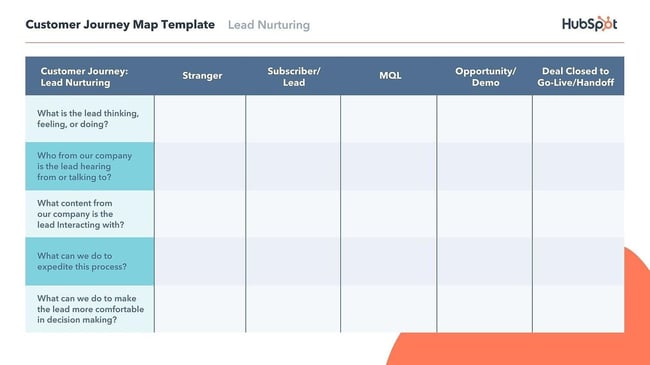
free editable customer journey map template

Featured Resource: Customer Journey Map Template

Download a free, editable customer journey map template.

HubSpot’s free Customer Journey Map Templates provide an outline for companies to understand their customers’ experiences. Download them today to start working on your customer journey map.

2. B2B Customer Journey Map ExampleB2B customer journey map example
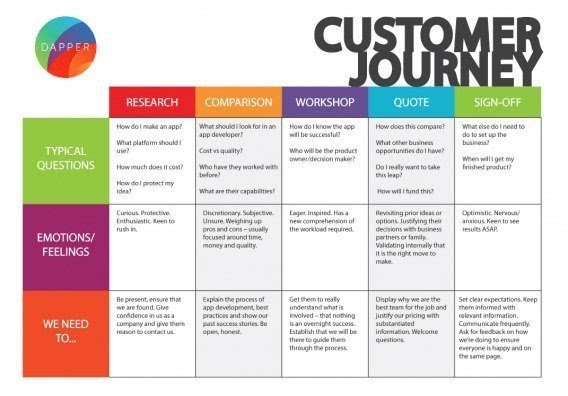
Image Source

This customer journey map clearly outlines the five steps Dapper Apps believes a customer goes through when interacting with them. As you can see, it goes beyond the actual purchasing phase by incorporating initial research and post-purchase needs.

This map is effective because it helps employees get into the mind of the customer by understanding the normal questions they have and the emotions they’re feeling. There are incremental action steps that Dapper Apps can take in response to these questions and feelings that will help it solve all the current problems customers are having.

3. Ecommerce Customer Journey Map Example
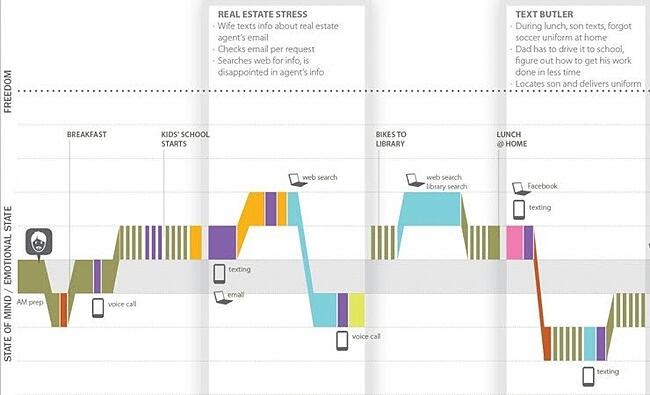
ecommerce customer journey map example
Image Source

This fictitious customer journey map is a clear example of a day in the life map. Rather than just focusing on the actions and emotions involved with the customer’s interaction with the company, this map outlines all the actions and emotions the customer experiences on a normal day.

This map is helpful because it measures a customer’s state of mind or emotional state based on the level of freedom they get from certain stimuli. This is helpful for a company that wants to understand what its target customers are stressed about and what problems may need solving that they don’t even know exist.

4. Future B2C Customer Journey Map Example
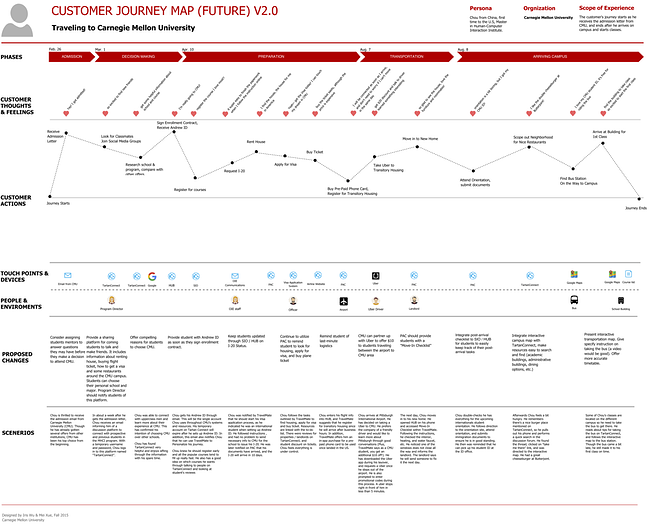
 future BTC customer journey map

Image Source

This customer journey map, designed for Carnegie Mellon University, exemplifies the usefulness of a future state customer journey map. It outlines the thoughts, feelings, and actions the university wants its students to be having and the touchpoints, devices, people, and environments it wants students to be interacting with.

Based on these goals, CMU chose specific proposed changes for each phase and even wrote out example scenarios for each phase. This is a clear diagram that can visualize the company vision and help any department understand where they will fit into building a better user experience.

5. Retail Customer Journey Map Example
 retail-customer-journey-map

Image Source

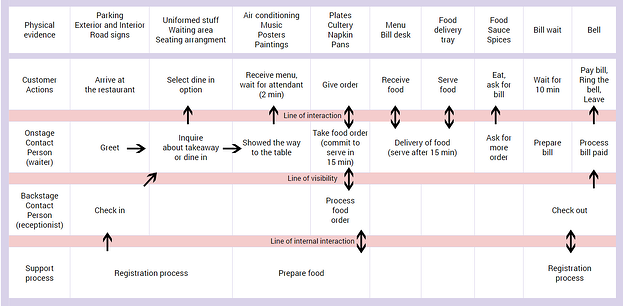
This customer journey map shows an in-depth customer journey map of a customer interacting with a fictitious restaurant. It’s clear that this style of map is more comprehensive than the others as it includes the front of stage (direct) and back of stage (non-direct or invisible) interactions a customer has with the company, as well as the support processes.

This map is more complicated, but it lays out every action involved in the customer experience, including those of the customer, employees directly serving, and employees working behind the scenes. By analyzing how each of these factors influences the customer journey, a company can find the root cause of mishaps and problem-solve this for the future.

Free Customer Journey Map Templates

To get your business from point A — deciding to focus on customer journeys — to point B — having a customer journey map in place — a critical step to the process is selecting which customer mindset your business will focus on. It will decide which of the following templates you can use to drive customers or clients to your goal.

1. Current State Template

 If you’re using this template for a B2B product, the phases may reflect the search, awareness, consideration of options, purchasing decision, and post-purchase support processes. For instance, in the Dapper Apps example, its phases were research, comparison, workshop, quote, and sign-off.

 current state customer journey map template

2. Day in the Life Template

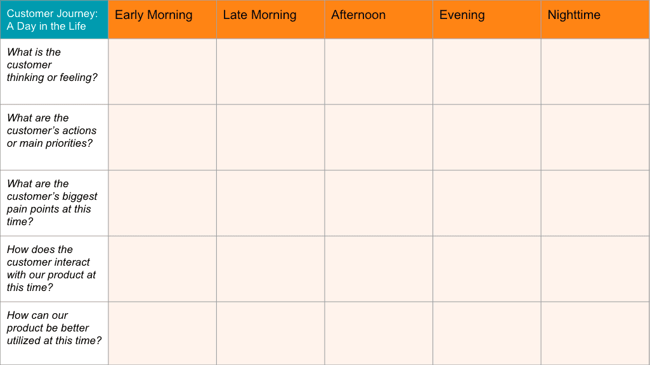
Since this template reflects all the thoughts, feelings, actions, needs, and pain points a customer has in their entire daily routine — whether or not that includes your company — you’ll want to map out this template in a chronological structure. This way, you can highlight the times of day at which you can offer the best support.

Click here for an interactive day in the life template.Customer journey map template day in the life
3. Future State Template

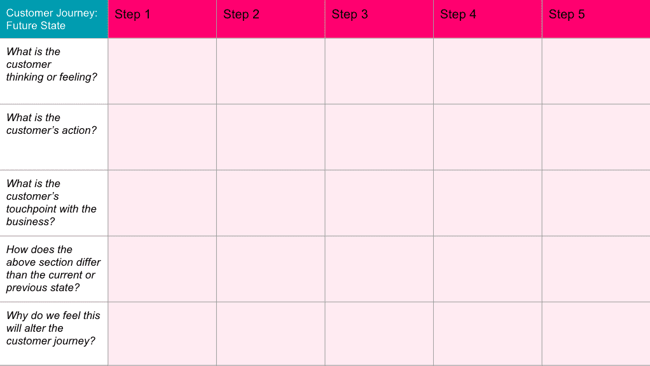
Similar to the current state template, these phases may also reflect the future predicted or desired search, awareness, consideration of options, purchasing decision, and post-purchase support processes. Since this takes place in the future, you can tailor these phases based on what you’d like the customer journey to look like, rather than what it currently looks like.

Click here for an interactive future state template.
 Customer journey map template future state

4. Service Blueprint Template

Since this template is more in-depth, it doesn’t follow certain phases in the customer journey. Rather, it is based on physical evidence — the tangible factors that can create impressions about the quality and prices of the service — that often come in sets of multiple people, places, or objects at a time.

For instance, in the fictitious restaurant example above, the physical evidence includes all of the staff, tables, decorations, cutlery, menus, food, and anything else a customer comes into contact with.

You would then list out the appropriate customer actions and employee interactions to correspond with each physical evidence.

For example, when the physical evidence is plates, cutlery, napkins, and pans, the customer gives their order, the front-of-stage employee — the waiter — takes the order, the back-of-stage employee — the receptionist — processes the order, and the support processes — the chefs — prepare the food.

Click here for an interactive service blueprint template.Customer journey map template service
5. Buyer’s Journey Template

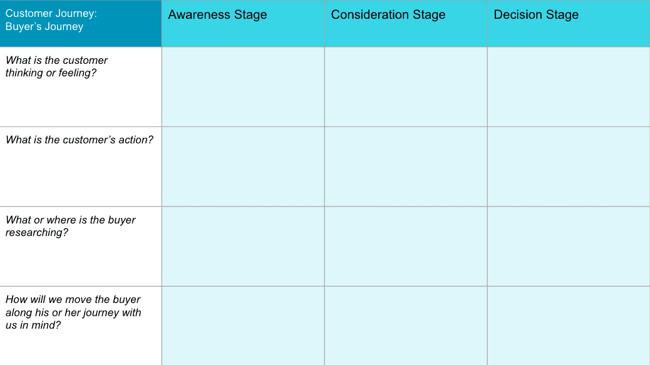
You can also use the classic buyer’s journey — awareness, consideration, and decision — to design your customer journey map.

Click here for an interactive buyer’s journey template.Customer journey map template buyer
Charter the Path to Customer Success

Once you fully understand your customer’s experience with your business, you can delight them at every stage in their buying journey. There are many factors that can affect this journey including customer pain points, emotions, and your company’s touchpoints and processes.

A customer journey map is the most effective way to visualize this information, whether you’re optimizing your journey for the customer or exploring a new business opportunity to serve a customer’s unrecognized needs. Use the free templates in this article to start mapping the future of customer success in your business.

Editor’s note: This post was originally published in August, 2018 and has been updated for comprehensiveness.

Originally published Mar 7, 2022 7:15:00 AM, updated March 07 2022

Don’t forget to share this post
How to Do Market Research: A Guide and Template

How to Do Market Research: A Guide and Template

Written by Debbie Farese

Discover the different types of market research, how to conduct your own market research, and use a free template to help you along the way. Today’s consumers have a lot of power. They can research your product or service and make purchase decisions entirely on their own. Moreover, rather than talking to one of your sales reps, they’re more likely to ask for referrals from members of their networks or read online reviews. With this in mind, have you adapted your marketing strategy to complement the way today’s consumers research, shop, and buy?

To do just that, you must have a deep understanding of who your buyers are, your specific market, and what influences the purchase decisions and behavior of your target audience members. Enter: Market Research. 

→ Download Now: Market Research Templates [Free Kit]

Whether you’re new to market research, this guide will provide you with a blueprint for conducting a thorough study of your market, target audience, competition, and more.

  1. What is Market Research?
  2. Primary vs. Secondary Research
  3. Types of Market Research
  4. How To Do Market Research
  5. Market Research Report Template
  6. Market Research Examples

What is market research?

Market research is the process of gathering information about your target market and customers to verify the success of a new product, help your team iterate on an existing product, or understand brand perception to ensure your team is effectively communicating your company’s value effectively.

Market research can answer various questions about the state of an industry, but it’s hardly a crystal ball that marketers can rely on for insights on their customers. Market researchers investigate several areas of the market, and it can take weeks or even months to paint an accurate picture of the business landscape.

However, researching just one of those areas can make you more intuitive to who your buyers are and how to deliver value that no other business is offering them right now.

Certainly you can make sound judgment calls based on your experience in the industry and your existing customers. However, keep in mind that market research offers benefits beyond those strategies. There are two things to consider: 

  1. Your competitors also have experienced individuals in the industry and a customer base. It’s very possible that your immediate resources are, in many ways, equal to those of your competition’s immediate resources. Seeking a larger sample size for answers can provide a better edge. 
  2. Your customers don’t represent the attitudes of an entire market. They represent the attitudes of the part of the market that is already drawn to your brand. 

The market research services market is growing rapidly, which signifies a strong interest in market research as we enter 2022. The market is expected to grow from roughly $75 billion in 2021 to $90.79 billion in 2025 at a compound annual growth rate of 5%. 

Why do market research?

Market research allows you to meet your buyer where they are. As our world (both digital and analog) becomes louder and demands more and more of our attention, this proves invaluable. By understanding your buyer’s problems, pain points, and desired solutions, you can aptly craft your product or service to naturally appeal to them.

Market research also provides insight into a wide variety of things that impact your bottom line, including:

  • Where your target audience and current customers conduct their product or service research
  • Which of your competitors your target audience looks to for information, options, or purchases
  • What’s trending in your industry and in the eyes of your buyer
  • Who makes up your market and what their challenges are
  • What influences purchases and conversions among your target audience 
  • Consumer attitudes about a particular topic, pain, product, or brand
  • Whether there’s demand for the business initiatives you’re investing in
  • Unaddressed or underserved customer needs that can be flipped into selling opportunity
  • Attitudes about pricing for a particular product or service

Ultimately, market research allows you to get information from a larger sample size of your target audience, eliminating bias and assumptions so that you can get to the heart of consumer attitudes. As a result, you can make better business decisions from knowing the bigger picture.

As you begin honing in on your market research, you’ll likely hear about primary and secondary market research. The easiest way to think about primary and secondary research is to envision to umbrellas sitting beneath market research: one for primary market research and one for secondary market research. 

Beneath these two umbrellas sits a number of different types of market research, which we’ll highlight below. Defining which of the two umbrellas your market research fits beneath isn’t necessarily crucial, although some marketers prefer to make the distinction. 

So, in case you encounter a marketer who wants to define your types of market research as primary or secondary — or if you’re one of them — let’s cover the definitions of the two categories next. Then, we’ll look at the different types of market research in the following section

Primary vs. Secondary Research

To give you an idea of how extensive market research can get, consider that it can either be qualitative or quantitative in nature — depending on the studies you conduct and what you’re trying to learn about your industry.

Qualitative research is concerned with public opinion, and explores how the market feels about the products currently available in that market. Quantitative research is concerned with data, and looks for relevant trends in the information that’s gathered from public records.

There are two main types of market research that your business can conduct to collect actionable information on your products, including primary research and secondary research. Let’s dive into those two types, now. 

Primary Research

Primary research is the pursuit of first-hand information about your market and the customers within your market. It’s useful when segmenting your market and establishing your buyer personas. Primary market research tends to fall into one of two buckets: exploratory and specific research.

Exploratory Primary Research

This kind of primary market research is less concerned with measurable customer trends and more about potential problems that would be worth tackling as a team. It normally takes place as a first step — before any specific research has been performed — and may involve open-ended interviews or surveys with small numbers of people.

Specific Primary Research

Specific primary market research often follows exploratory research and is used to dive into issues or opportunities the business has already identified as important. In specific research, the business can take a smaller or more precise segment of their audience and ask questions aimed at solving a suspected problem.

Secondary Research

Secondary research is all the data and public records you have at your disposal to draw conclusions from (e.g. trend reports, market statistics, industry content, and sales data you already have on your business). Secondary research is particularly useful for analyzing your competitors. The main buckets your secondary market research will fall into include:

Public Sources

These sources are your first and most-accessible layer of material when conducting secondary market research. They’re often free to find and review — lots of bang for your buck here.

Government statistics are one of the most common types of public sources according to Entrepreneur. Two U.S. examples of public market data are the U.S. Census Bureau and the Bureau of Labor & Statistics, both of which offer helpful information on the state of various industries nationwide.

Commercial Sources

These sources often come in the form of market reports, consisting of industry insight compiled by a research agency like PewGartner, or Forrester. Because this info is so portable and distributable, it typically costs money to download and obtain.

Internal Sources

Internal sources deserve more credit for supporting market research than they generally get. Why? This is the market data your organization already has!

Average revenue per sale, customer retention rates, and other historical data on the health of old and new accounts can all help you draw conclusions on what your buyers might want right now.

Now that we’ve covered these overarching market research categories, let’s get more specific and look at the various types of market research you might choose to conduct. 

Types of Market Research

  1. Interviews
  2. Focus Groups
  3. Product/ Service Use Research
  4. Observation-Based Research
  5. Buyer Persona Research
  6. Market Segmentation Research
  7. Pricing Research
  8. Competitive Analysis Research
  9. Customer Satisfaction and Loyalty Research
  10. Brand Awareness Research
  11. Campaign Research

1. Interviews

Interviews allow for face-to-face discussions (in-person and virtual) so you can allow for a natural flow or conversation and watch your interviewee’s body language while doing so. 

Your interviewees can answer questions about themselves to help you design your buyer personas. These buyer personas describe your ideal customer’s age, family size, budget, job title, the challenges they face at work, and similar aspects of their lifestyle. Having this buyer profile in hand can shape your entire marketing strategy, from the features you add to your product to the content you publish on your website.

2. Focus Groups

Focus groups provide you with a handful of carefully-selected people that you can have test out your product, watch a demo, provide feedback, and/or answer specific questions.

This type of market research can give you ideas for product differentiation, or the qualities of your product that make it unique in the marketplace. Consider asking your focus group questions about (and showing them examples of) your services, and ultimately use the group’s feedback to make these services better.

3. Product/Service Use Research

Product or service use research offers insight into how and why your audience uses your product or service, and specific features of that item. This type of market research also gives you an idea of the product or service’s usability for your target audience. 

In a 2020 report, respondents rated usability testing most highly in terms of usefulness for discovering user insights (rating it 8.7 out of 10). By comparison, digital analytics was rated 7.7, and user surveys 6.4.

4. Observation-Based Research

Observation-based research allows you to sit back and watch the ways in which your target audience members go about using your product or service, what works well in terms of UX, what roadblocks they hit, and which aspects of it could be easier for them to use and apply. 

5. Buyer Persona Research

Buyer persona research gives you a realistic look at who makes up your target audience, what their challenges are, why they want your product or service, what they need from your business and brand, and more. 

6. Market Segmentation Research

Market segmentation research allows you to categorize your target audience into different groups (or segments) based on specific and defining characteristics — this way, you can determine effective ways to meet their needs, understand their pain points and expectations, learn about their goals, and more. 

7. Pricing Research

Pricing research gives you an idea of what similar products or services in your market sell for, what your target audience expects to pay — and is willing to pay — for whatever it is you sell, and what’s a fair price for you to list your product or service at. All of this information will help you define your pricing strategy

8. Competitive Analysis

Competitive analyses are valuable because they give you a deep understanding of the competition in your market and industry. You can learn about what’s doing well in your industry, what your target audience is already going for in terms of products like yours, which of your competitors should you work to keep up with and surpass, and how you can clearly separate yourself from the competition

9. Customer Satisfaction and Loyalty Research

Customer satisfaction and loyalty research give you a look into how you can get current customers to return for more business and what will motivate them to do so (e.g. loyalty programs, rewards, remarkable customer service). This research will help you discover the most-effective ways to promote delight among your customers.

10. Brand Awareness Research

Brand awareness research tells you about what your target audience knows about and recognizes from your brand. It tells you about the associations your audience members make when they think about your business and what they believe you’re all about.  

11. Campaign Research

Campaign research entails looking into your past campaigns and analyzing their success among your target audience and current customers. It requires experimentation and then a deep dive into what reached and resonated with your audience so you can keep those elements in mind for your future campaigns and hone in on the aspects of what you do that matters most to those people. 

Now that you know about the categories and types of market research, let’s review how you can conduct your market research.

Here’s how to do market research step-by-step.

How to Do Market Research

  1. Define your buyer persona.
  2. Identify a persona group to engage.
  3. Prepare research questions for your market research participants.
  4. List your primary competitors.
  5. Summarize your findings.

1. Define your buyer persona.

Before you dive into how customers in your industry make buying decisions, you must first understand who they are.

This is where your buyer personas come in handy. Buyer personas — sometimes referred to as marketing personas — are fictional, generalized representations of your ideal customers.

Use a free tool to create a buyer persona that your entire company can use to market, sell, and serve better.

How to do market research defining your buyer persona

They help you visualize your audience, streamline your communications, and inform your strategy. Some key characteristics you should be keen on including in your buyer persona are:

  • Age
  • Gender
  • Location
  • Job title(s)
  • Job titles
  • Family size
  • Income
  • Major challenges

The idea is to use your persona as a guideline for  how to effectively reach and learn about the real audience members in your industry. Also, you may find that your business lends itself to more than one persona — that’s fine! You just need to be  thoughtful about each specific persona when you’re optimizing and planning your content and campaigns.

To get started with creating your personas, check out these free templates, as well as this helpful tool. 

2. Identify a persona group to engage.

Now that you know who your buyer personas are, use that information to help you identify a group to engage to conduct your market research with — this should be a representative sample of your target customers so you can better understand their actual characteristics, challenges, and buying habits.

The group you identify to engage should also be made of people who recently made a purchase or purposefully decided not to make one. Here are some more guidelines and tips to help you get the right participants for your research. 

How to Identify the Right People to Engage for Market Research

When choosing who to engage for your market research, start by focusing on people who have the characteristics that apply to your buyer persona. You should also:Aim for 10 participants per buyer persona.

We recommend focusing on one persona, but if you feel it’s necessary to research multiple personas, be sure to recruit a separate sample group for each one.

Select people who have recently interacted with you.

You may want to focus on people that have completed an evaluation within the past six months — or up to a year if you have a longer sales cycle or niche market. You’ll be asking very detailed questions so it’s important that their experience is fresh.

Gather a mix of participants.

You want to recruit people who have purchased your product, purchased a competitor’s product, and decided not to purchase anything at all. While your customers will be the easiest to find and recruit, sourcing information from those who aren’t customers (yet!) will help you develop a balanced view of your market. Here are some more details on how to select this mix of participants:

  • Pull a list of customers who made a recent purchase. As we mentioned before, this is usually the easiest set of buyers to recruit. If you’re using a CRM system, you can run a report of deals that closed within the past six months and filter it for the characteristics you’re looking for. Otherwise, you can work with your sales team to get a list of appropriate accounts from them.
  • Pull a list of customers who were in an active evaluation, but didn’t make a purchase. You should get a mix of buyers who either purchased from a competitor or decided not to make a purchase. Again, you can get this list from your CRM or from whatever system your Sales team uses to track deals.
  • Call for participants on social media. Try reaching out to the folks that follow you on social media, but decided not to buy from you. There’s a chance that some of them will be willing to talk to you and tell you why they ultimately decided not to buy your product.
  • Leverage your own network. Get the word out to your coworkers, former colleagues, and LinkedIn connections that you’re conducting a study. Even if your direct connections don’t qualify, some of them will likely have a coworker, friend, or family member who does.
  • Choose an incentive. Time is precious, so you’ll need to think about how you will motivate someone to spend 30-45 minutes on you and your study. On a tight budget? You can reward participants for free by giving them exclusive access to content. Another option? Send a simple handwritten ‘thank you’ note once the study is complete. 

3. Prepare research questions for your market research participants.

The best way to make sure you get the most out of your conversations is to be prepared. You should always create a discussion guide — whether it’s for a focus group, online survey, or a phone interview — to make sure you cover all of the top-of-mind questions and use your time wisely.

(Note: This is not intended to be a script. The discussions should be natural and conversational, so we encourage you to go out of order or probe into certain areas as you see fit.)

Your discussion guide should be in an outline format, with a time allotment and open-ended questions for each section.

Wait, all open-ended questions?

Yes — this is a golden rule of market research. You never want to “lead the witness” by asking yes and no questions, as that puts you at risk of unintentionally swaying their thoughts by leading with your own hypothesis. Asking open-ended questions also helps you avoid one-word answers (which aren’t very helpful for you).

Example Outline of a 30-Minute Survey 

Here’s a general outline for a 30-minute survey for one B2B buyer. You can use these as talking points for an in-person interview, or as questions posed on a digital form to administer as a survey to your target customers.

Background Information (5 Minutes)

Ask the buyer to give you a little background information (their title, how long they’ve been with the company, and so on). Then, ask a fun/easy question to warm things up (first concert attended, favorite restaurant in town, last vacation, etc.).

Remember, you want to get to know your buyers in pretty specific ways. You might be able to capture basic information such as age, location, and job title from your contact list, there are some personal and professional challenges you can really only learn by asking.

Here are some other key background questions to ask your target audience:

  • Describe how your team is structured.
  • Tell me about your personal job responsibilities.
  • What are the team’s goals and how do you measure them?
  • What has been your biggest challenge in the past year?

Now, make a transition to acknowledge the specific purchase or interaction they made that led to you including them in the study. The next three stages of the buyer’s journey will focus specifically on that purchase.

Awareness (5 Minutes)

Here, you want to understand how they first realized they had a problem that needed to be solved without getting into whether or not they knew about your brand yet.

  • Think back to when you first realized you needed a [name the product/service category, but not yours specifically]. What challenges were you facing at the time?
  • How did you know that something in this category could help you?
  • How familiar were you with different options on the market?

Consideration (10 Minutes)

Now you want to get very specific about how and where the buyer researched potential solutions. Plan to interject to ask for more details.

  • What was the first thing you did to research potential solutions? How helpful was this source?
  • Where did you go to find more information?

If they don’t come up organically, ask about search engines, websites visited, people consulted, and so on. Probe, as appropriate, with some of the following questions:

  • How did you find that source?
  • How did you use vendor websites?
  • What words specifically did you search on Google?
  • How helpful was it? How could it be better?
  • Who provided the most (and least) helpful information? What did that look like?
  • Tell me about your experiences with the sales people from each vendor.

Decision (10 Minutes)

  • Which of the sources you described above was the most influential in driving your decision?
  • What, if any, criteria did you establish to compare the alternatives?
  • What vendors made it to the short list and what were the pros/cons of each?
  • Who else was involved in the final decision? What role did each of these people play?
  • What factors ultimately influenced your final purchasing decision?

Closing

Here, you want to wrap up and understand what could have been better for the buyer.

  • Ask them what their ideal buying process would look like. How would it differ from what they experienced?
  • Allow time for further questions on their end.
  • Don’t forget to thank them for their time and confirm their address to send a thank-you note or incentive.

4. List your primary competitors.

List your primary competitors — keep in mind listing the competition isn’t always as simple as Company X versus Company Y.

Sometimes, a division of a company might compete with your main product or service, even though that company’s brand might put more effort in another area.

For example. Apple is known for its laptops and mobile devices but Apple Music competes with Spotify over its music streaming service.

From a content standpoint, you might compete with a blog, YouTube channel, or similar publication for inbound website visitors — even though their products don’t overlap with yours at all.

And a toothpaste company might compete with magazines like Health.com or Prevention on certain blog topics related to health and hygiene even though the magazines don’t actually sell oral care products.

Identifying Industry Competitors

To identify competitors whose products or services overlap with yours, determine which industry or industries you’re pursuing. Start high-level, using terms like education, construction, media & entertainment, food service, healthcare, retail, financial services, telecommunications, and agriculture.

The list goes on, but find an industry term that you identify with, and use it to create a list of companies that also belong to this industry. You can build your list the following ways:

  • Review your industry quadrant on G2 Crowd: In certain industries, this is your best first step in secondary market research. G2 Crowd aggregates user ratings and social data to create “quadrants,” where you can see companies plotted as contenders, leaders, niche, and high performers in their respective industries. G2 Crowd specializes in digital content, IT services, HR, ecommerce, and related business services.
  • Download a market report: Companies like Forrester and Gartner offer both free and gated market forecasts every year on the vendors who are leading their industry. On Forrester’s website, for example, you can select “Latest Research” from the navigation bar and browse Forrester’s latest material using a variety of criteria to narrow your search. These reports are good assets to save on your computer.
  • Search using social media: Believe it or not, social networks make great company directories if you use the search bar correctly. On LinkedIn, for example, select the search bar and enter the name of the industry you’re pursuing. Then, under “More,” select “Companies” to narrow your results to just the businesses that include this or a similar industry term on their LinkedIn profile.

Identifying Content Competitors

Search engines are your best friends in this area of secondary market research. To find the online publications with which you compete, take the overarching industry term you identified in the section above, and come up with a handful of more specific industry terms your company identifies with.

A catering business, for example, might generally be a “food service” company, but also consider itself a vendor in “event catering,” “cake catering,” “baked goods,” and more.

Once you have this list, do the following:

  • Google it: Don’t underestimate the value in seeing which websites come up when you run a search on Google for the industry terms that describe your company. You might find a mix of product developers, blogs, magazines, and more.
  • Compare your search results against your buyer persona: Remember the buyer persona you created during the primary research stage, earlier in this article? Use it to examine how likely a publication you found through Google could steal website traffic from you. If the content the website publishes seems like the stuff your buyer persona would want to see, it’s a potential competitor, and should be added to your list of competitors.

After a series of similar Google searches for the industry terms you identify with, look for repetition in the website domains that have come up.

Examine the first two or three results pages for each search you conducted. These websites are clearly respected for the content they create in your industry, and should be watched carefully as you build your own library of videos, reports, web pages, and blog posts.

5. Summarize your findings.

Feeling overwhelmed by the notes you took? We suggest looking for common themes that will help you tell a story and create a list of action items.

To make the process easier, try using your favorite presentation software to make a report, as it will make it easy to add in quotes, diagrams, or call clips.

Feel free to add your own flair, but the following outline should help you craft a clear summary:

  • Background: Your goals and why you conducted this study.
  • Participants: Who you talked to. A table works well so you can break groups down by persona and customer/prospect.
  • Executive Summary: What were the most interesting things you learned? What do you plan to do about it?
  • Awareness: Describe the common triggers that lead someone to enter into an evaluation. (Quotes can be very powerful.)
  • Consideration: Provide the main themes you uncovered, as well as the detailed sources buyers use when conducting their evaluation.
  • Decision: Paint the picture of how a decision is really made by including the people at the center of influence and any product features or information that can make or break a deal.
  • Action Plan: Your analysis probably uncovered a few campaigns you can run to get your brand in front of buyers earlier and/or more effectively. Provide your list of priorities, a timeline, and the impact it will have on your business.

Lastly, let’s review a resource that can help you compile everything we just discussed in a simple yet effective way (plus, it’s free!).

Market Research Report Template

Within a market research kit, there are a number of critical pieces of information for your business’s success. Let’s take a look at what those different kit elements are next. 

Pro Tip: Upon downloading HubSpot’s free Market Research Kit, you’ll receive editable templates for each of the given parts of the kit as well as instructions on how to use the templates and kit, and a mock presentation that you can edit and customize. 

market research kit and templates from HubSpot

Download HubSpot’s free, editable market research report template here. 

1. Five Forces Analysis Template

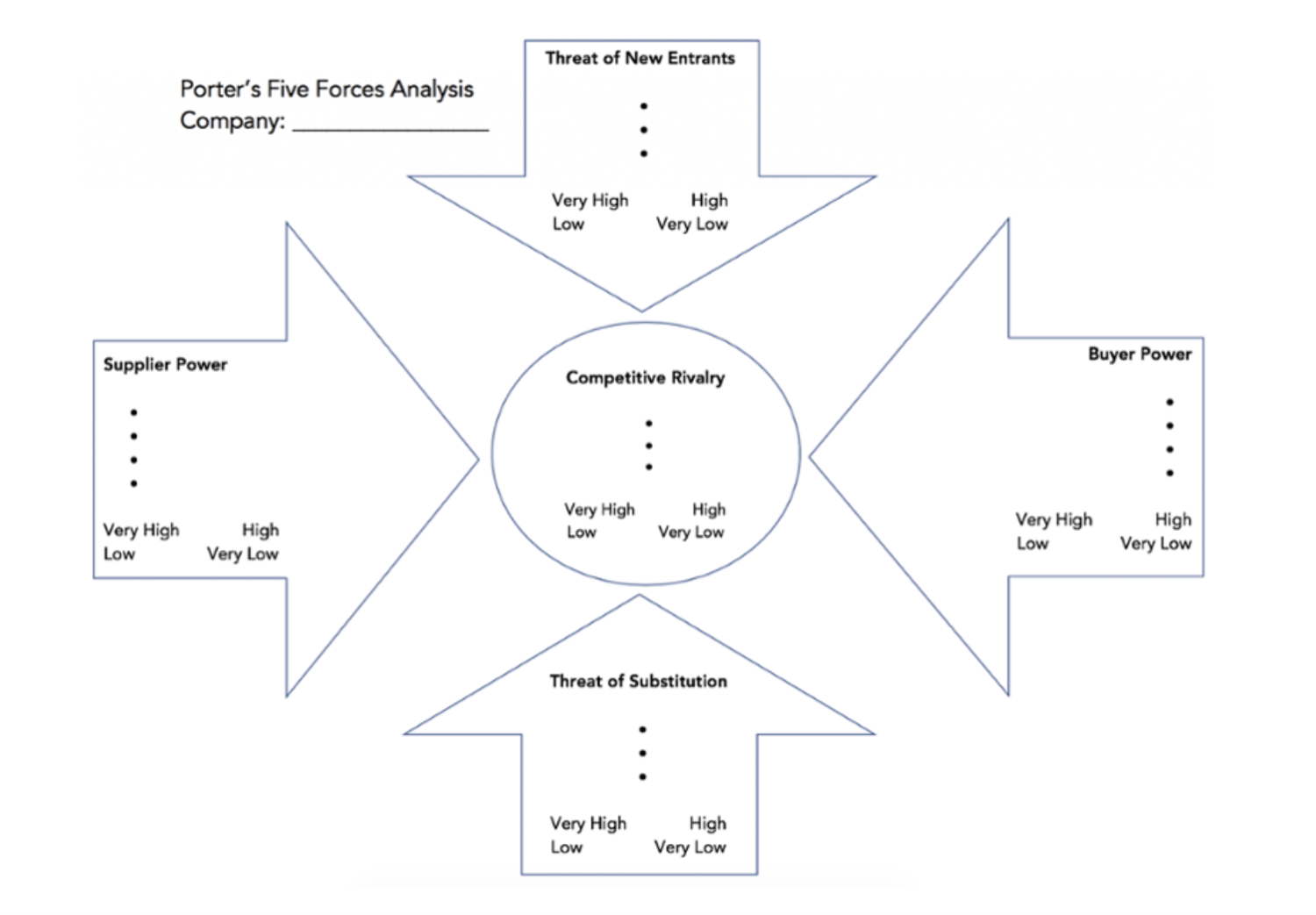
five forces analysis template

Use Porter’s Five Forces Model to understand an industry by analyzing five different criteria and how high the power, threat, or rivalry in each area is — here are the five criteria: 

  • Competitive rivalry
  • Threat of new entrants
  • Threat of substitution
  • Buyer power
  • Supplier power

Download a free, editable Five Forces Analysis template here. 

2. SWOT Analysis Template

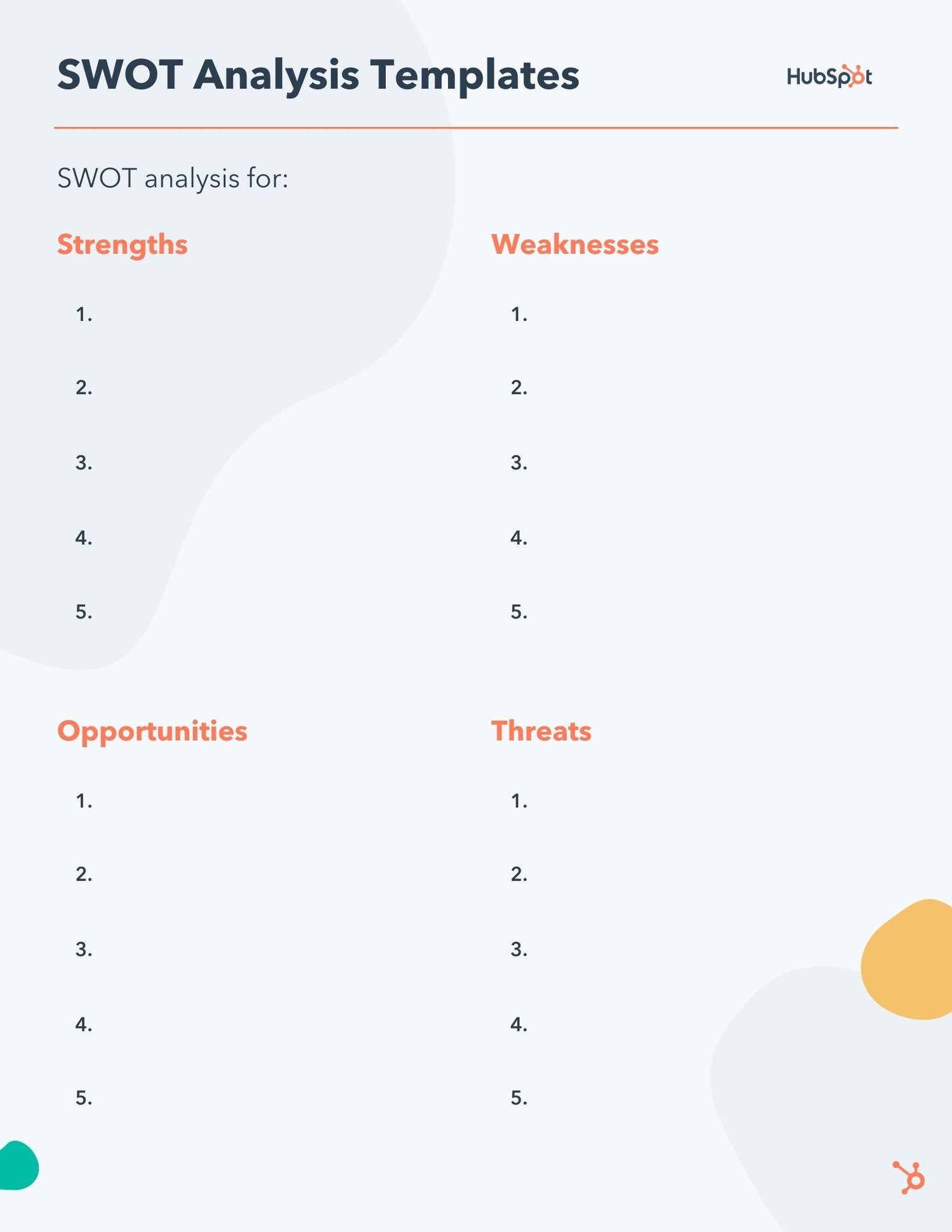
free editable swot analysis template

  A SWOT (Strengths, Weaknesses, Opportunities, Threats) analysis looks at your internal strengths and weaknesses, and your external opportunities and threats within the market.A SWOT analysis highlights direct areas of opportunity your company can continue, build, focus on, and work to overcome. Download a free, editable SWOT Analysis template here. 

3. Market Survey Template

Both market surveys and focus groups (which we’ll cover in the next section) help you uncover important information about your buyer personas, target audience, current customers, market, competition, and more (e.g. demand for your product or service, potential pricing, impressions of your branding, etc.).

Surveys should contain a variety of question types, like multiple choice, rankings, and open-ended responses. Ask quantitative and short-answer questions to save you time and to more easily draw conclusions. (Save longer questions that will warrant more detailed responses for your focus groups.)

Here are some categories of questions you should ask via survey: 

  • Demographic questions
  • Business questions
  • Competitor questions
  • Industry questions
  • Brand questions
  • Product questions

Download a free, editable Market Survey template here. 

4. Focus Group Template

Focus groups are an opportunity to collect in-depth, qualitative data from your real customers or members of your target audience. You should ask your focus group participants open-ended questions. While doing so, keep these tips top of mind:

  • Set a limit for the number of questions you’re asking (after all, they’re open-ended). 
  • Provide participants with a prototype or demonstration.
  • Ask participants how they feel about your price.
  • Ask participants about your competition.
  • Offer participants time at the end of the session for final comments, questions, or concerns.

Download a free, editable Focus Group template here. 

Market Research Examples 

1. Disney uses kid-centric focus groups to test new characters and ideas.

The Walt Disney Company can spend millions crafting what its Animation Studio team believes is a worthwhile story, but it wisely focuses on its intended audience — children — when testing how well a character or topic performs. 

A few times each year, Disney executives meet with preschoolers and kindergartners in kid-centric focus groups to get their opinions and insights on TV episodes, Disney characters, and more. 

Why is this an effective market research strategy? Because children are ultimately the audience Disney hopes to delight — so collecting their feedback is invaluable to iterating on their existing content and ensuring it continues to meet its audiences’ preferences.

2. KFC tested its meatless product in select markets before launching nationwide.

In 2019, KFC began developing and testing a new meatless version of its chicken. Rather than instantly rolling the product out nationwide, however, it started small: In select stores in the Atlanta, Georgia area

This is an easy, effective example of conducting market research to determine how well a new product sells on a smaller scale before dedicating too many resources to it. If the meatless chicken flopped in Georgia, KFC would need to change the product before re-launching it to the market.

3. Yamaha conducted a survey to determine whether they should use knobs or sliding faders on the Montage keyboard.

When Yamaha, a Japanese-based corporation that produces a variety of products ranging from motorcycles to golf cars to musical instruments, began developing its new Montage keyboard, the team was unsure whether to use knobs or sliding faders on the product.

So Yamaha used Qualtrics to send a survey to their customers, and received 400 responses in a few hours. 

Using survey feedback helped Yamaha ensure it was designing a product that exactly fit its audiences’ preferences.

4. The Body Shop used social listening to determine how they should re-position brand campaigns to respond to what their customers cared most about.

The Body Shop has long been known for offering ethically sourced and natural products, and proudly touts “sustainability” as a core value. 

To dive deeper into the sustainability sub-topics that meant the most to their audiences, the team at The Body Shop tracked conversations and ultimately found their audiences cared a lot about refills. 

Using this information helped the Body Shop team feel confident when relaunching their Refill Program across 400 stores globally in 2021, and another 400 in 2022. Market research proved they were on the right track with their refill concept, and demonstrated increased efforts were needed to show Body Shop customers that the Body Shop cared about their customers’ values. 

Conduct Market Research to Grow Better

Conducting market research can be a very eye-opening experience. Even if you think you know your buyers pretty well, completing the study will likely uncover new channels and messaging tips to help improve your interactions.

Editor’s note: This post was originally published in March 2016 and has been updated for comprehensiveness.

market research kit

New call-to-action


Originally published Feb 24, 2022 7:00:00 AM, updated February 24 2022

Topics:Conducting Marketing Research

Don’t forget to share this post!

0
    0
    Your Cart
    Your cart is emptyReturn to Shop
    Verified by MonsterInsights